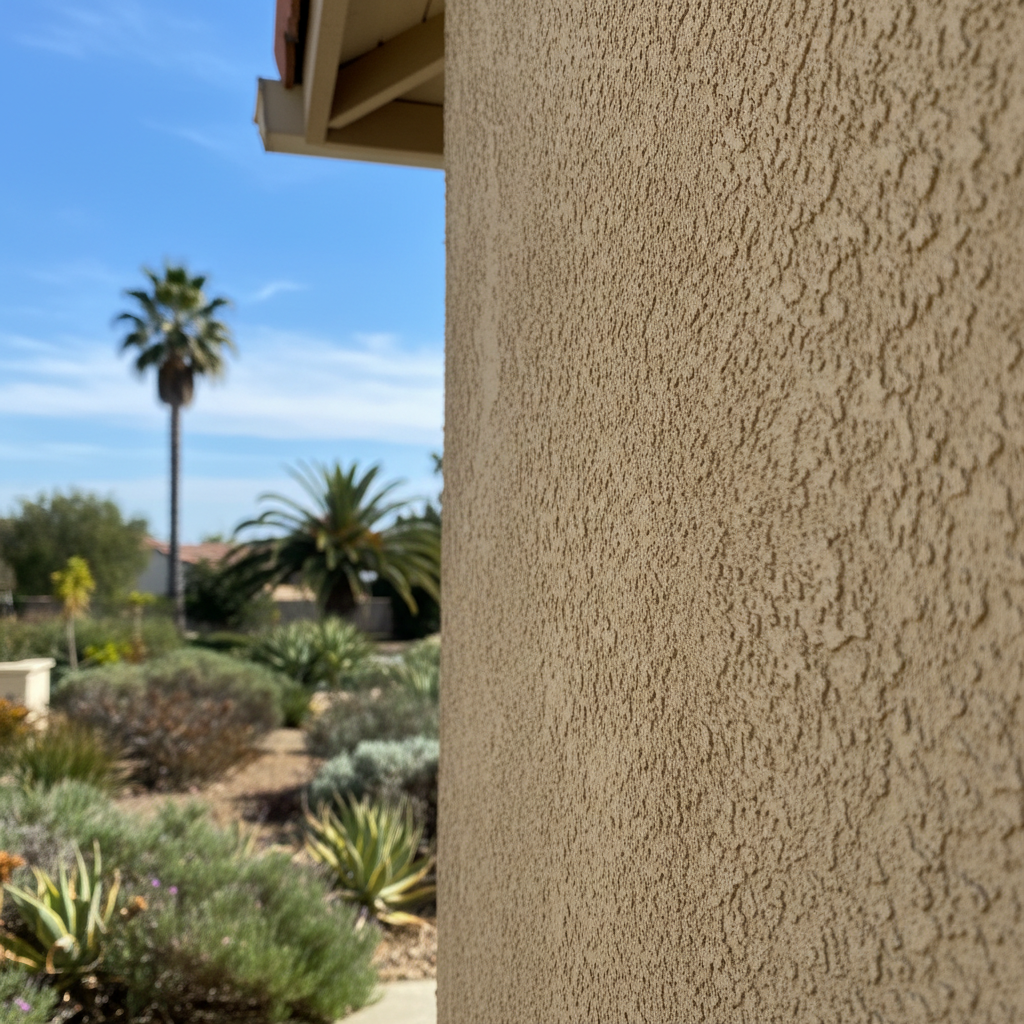
You do not need a degree in construction to spot trouble on your exterior walls, but you do need a pair of eyes and a little bit of patience. Living right here in Oxnard means our homes take a steady beating from the marine layer rolling off the Pacific, carrying salt air that loves to find the weak spots in your finish. If you have been noticing a few hairline cracks or some strange discoloration near your foundation, it is time to take a closer look before winter rains decide to test your waterproof barriers.
Oxnard Stucco & Plastering provides this straightforward breakdown of how to check your stucco, what you can handle on a Saturday morning, and when you really need to bring in someone who does Stucco Repair for a living in Oxnard, CA.
Before You Start: Getting Your Eyes Ready
You do not need fancy gear for a basic walk-around. Grab a clipboard, a notepad, and maybe a garden hose. Walk the perimeter of your house on a dry day, staying far enough back to see whole wall planes at once. Look for shadows or blotches that look out of place. The coastal moisture we get around Southwinds or Hollywood Beach likes to settle into tiny crevices, creating dark patches that dry out slower than the rest of the wall. Write down every area that looks suspicious so you do not forget it by the time you finish the circuit.
What You Can DIY: The Close-Up Check
Get up close to those marked spots. You can easily check for hairline cracks yourself—anything thinner than a credit card is usually normal shrinkage and movement. Grab a ruler or just eyeball it. Tap gently on the Stucco with the plastic handle of a screwdriver. A solid wall makes a sharp, crisp tap. If you hear a hollow, dull thud, that means the Stucco has delaminated, meaning it is detached from the lath underneath. That is a red flag. Check around window sills and door frames where flashing is supposed to keep water out. If you see efflorescence—that crusty white powder pushing through the surface—it means moisture is traveling through your wall and dissolving salts along the way.
When to Call Oxnard Stucco & Plastering
Oxnard Stucco & Plastering knows that some things go beyond a DIY patch kit. If you poke a crack and the screwdriver sinks right in, or if you find wide diagonal cracks running from the corners of your windows down to the foundation, stop right there. Those structural cracks mean your framing is shifting or moisture has rotted the wood lath behind the coat. Once water gets behind traditional three-coat Stucco in our damp Oxnard microclimates, it rots studs fast. That is the exact moment you pick up the phone and call a pro for Stucco Repair in Oxnard. Oxnard Stucco & Plastering uses moisture meters and thermal cameras that show you where the water is hiding behind the surface.
After Your Inspection: Taking Action
If you only found minor hairline cracks, you can clean them out with a stiff brush and seal them with an elastomeric caulk designed for masonry. Paint over it with a good breathable masonry paint to lock out the fog and coastal air. If you found hollow spots, crumbling corners, or deep stains, leave those alone until a qualified plasterer can cut out the damaged section and tie new wire and cement back into the existing wall. Catching these problems early keeps your Stucco Repair bill small and your home solid in Oxnard.