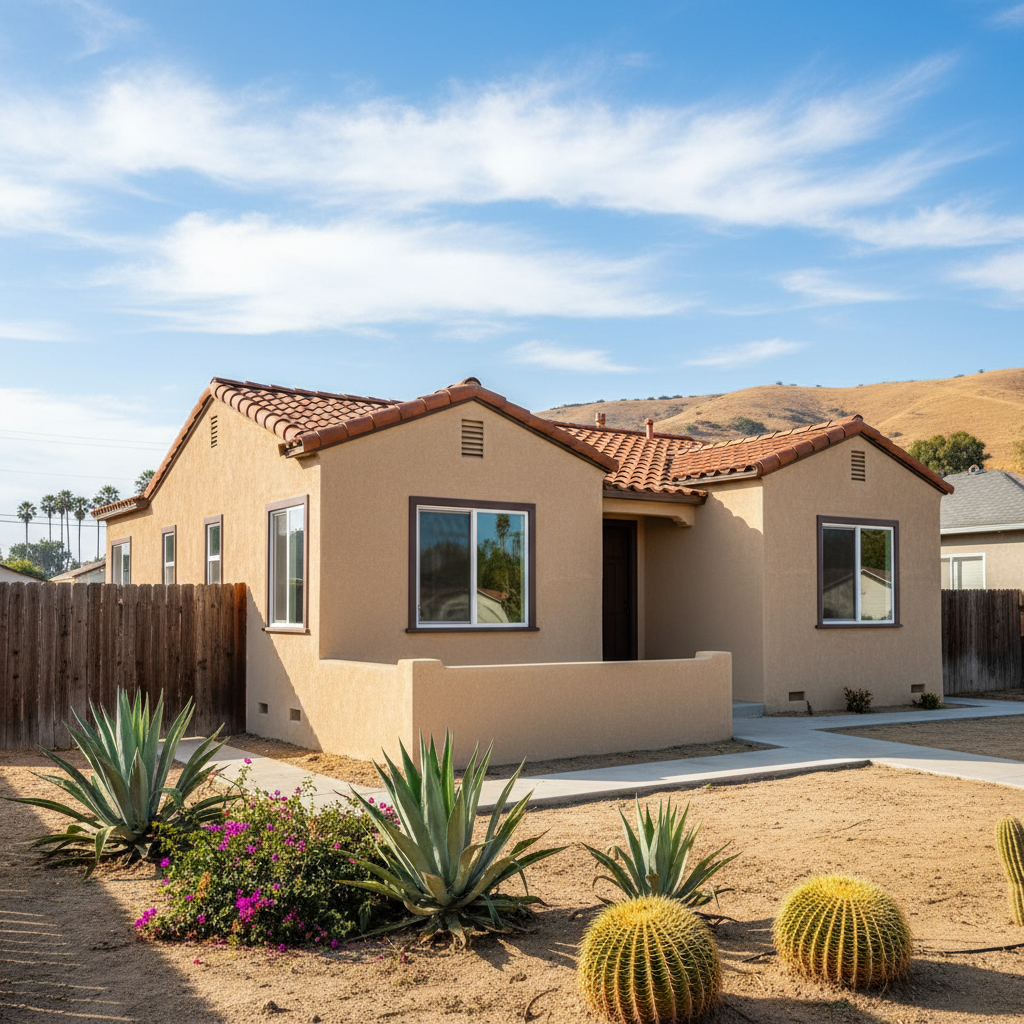
Breaking Down Stucco Installation Costs in Oxnard
So, you're thinking about new stucco for your place, and naturally, you want to know what it's going to set you back. It's not as simple as grabbing a gallon of milk, but I can certainly give you a good idea of what to expect right here in Oxnard. I've been doing this work for years, and I've seen all sorts of projects, from small touch-ups to entire house makeovers.
First things first: there isn't a single "price per square foot" that works for every job. Anyone who gives you that number upfront, without even seeing your home, isn't telling you the whole story. The cost really depends on a bunch of things, and understanding those factors will help you make sense of the estimates you get.
What Makes the Price Go Up or Down?
A few key elements really swing the cost one way or another:
- Your Home's Size and How Tricky It Is: This is a big one, obviously. A smaller, single-story ranch house in College Estates will be much simpler and quicker to stucco than, say, a custom two-story place down by the harbor with all sorts of architectural details, bump-outs, and different wall angles. More corners, more windows, more doors – that all means more labor for cutting, flashing, and finishing.
- The Stucco System You Choose: Are we talking about traditional three-coat stucco, or a one-coat system? Three-coat is usually tougher and takes more time and material, so it costs more. One-coat systems can be a bit faster to put on, but they have their own considerations, too.
- Condition of the Wall Underneath: If we're going over existing siding or a rough surface, we might need to do some prep work. Sometimes you'll need a new moisture barrier or lath, especially if there are water problems we need to sort out first. If we have to rip off old siding or fix damaged sheathing, that's an extra charge.
- Finish Texture and Color: A super smooth, Santa Barbara finish needs more skill and time to get just right than a standard sand finish, so it'll cost more. Darker colors also sometimes need more coats to cover properly, which means more material and labor.
- How Easy It Is to Get Around: If we need a lot of scaffolding because your house is really tall or sitting on a steep slope, that's an added expense. Good, easy access means less setup time and faster work for us.
- Repairs and Fixing Things: This isn't strictly part of the stucco installation, but if we find dry rot, termite damage, or serious water damage behind existing siding during the prep phase, those repairs are crucial. They'll add to your total project cost. You definitely don't want to just cover up existing problems, right?
Typical Cost Ranges in Oxnard
Alright, let's talk actual numbers. Based on what I've seen with Oxnard Stucco & Plastering and throughout the local market, here's a general idea. Remember, these are broad ranges; your specific project will land somewhere inside them, or occasionally slightly outside if it's truly unique.
- For a complete new stucco installation on an average 1,500-2,000 sq ft single-story home with a standard finish, you're usually looking at something between $18,000 to $30,000.
- For a bigger 2,500-3,500 sq ft two-story home, especially one with more complex architecture or a premium finish like smooth stucco, that range can jump to $30,000 to $55,000+.
These numbers typically cover materials, labor, scaffolding, and basic site cleanup. They usually don't include major structural repairs or big window/door replacements unless we've talked about it specifically.
What Should Be in Your Quote?
When you get an estimate, make sure it's detailed. It should clearly spell out:
- The square footage getting stuccoed.
- The type of stucco system (like three-coat or one-coat).
- The exact materials we'll use (e.g., brand of lath, type of cement, finish coat product).
- The chosen texture and color.
- Any prep work involved (like taking off old siding, flashing details).
- Scaffolding or lift rental costs.
- Cleanup and debris removal.
- Warranty information.
Don't just accept a single line item for